Cervical Cancer
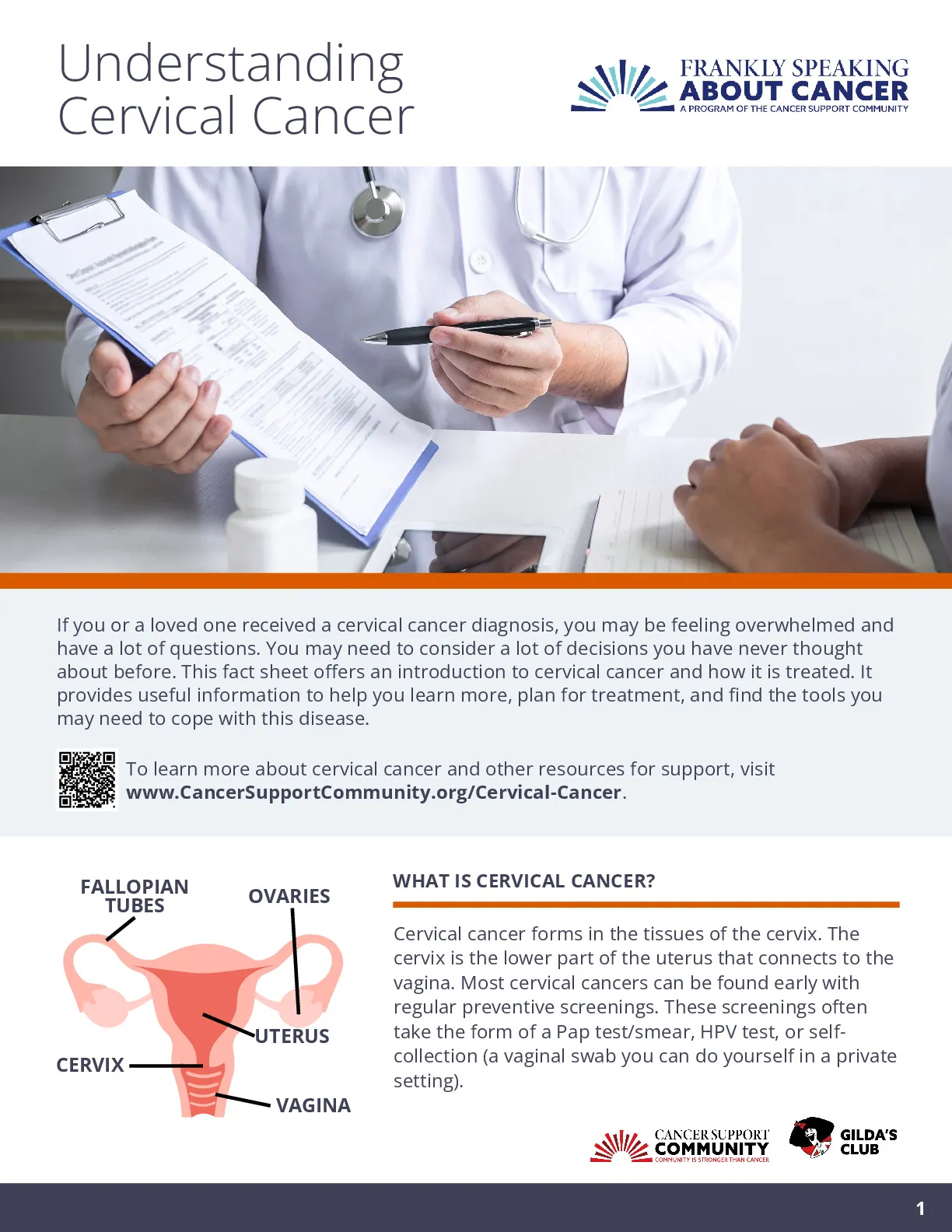
Cervical cancer forms in the tissues of the cervix, which is the lower part of the uterus that connects to the vagina. This is usually a slow-growing cancer that may not cause symptoms, especially for small tumors. Most cervical cancers can be found early with regular preventive screenings, which includes a pap smear. It can be prevented early with the human papillomavirus (HPV) vaccine.
HPV is the name for a group of more than 100 related viruses. Those that cause cancer are called “high risk” HPVs. Infection with HPV is the main cause of cervical cancer. In most cases, the immune system can prevent HPV from causing harm.
Risk Factors
Research is improving our understanding of cervical cancer and its causes. HPV infection and other risk factors may act together to increase the risk of cancer forming. The following are known risk factors for the disease:
- Human Papilloma Virus (HPV) Infection
- Birth Control Pills
- Chlamydia Infection
- Diet
- Diethylstilbestrol (DES)
- Human Immunodeficiency Virus (HIV)
- Multiple Pregnancies/Early Pregnancy
- Smoking
An HPV infection is passed from person to person by skin-to-skin contact with someone infected. This happens most often through vaginal, anal or oral sex, but it can also happen in other ways. Women may have HPV but never develop cervical cancer. Women who have chronic HPV infections, plus one or more other risk factors, have a higher chance of developing cervical cancer.
Long-term use of birth control pills may increase the risk of cervical cancer. The risk increases the longer a woman takes birth control pills, but the risk decreases after she stops.
Women who have a past or current chlamydia infection are at greater risk of cervical cancer.
Diets low in fruits and vegetables are linked to an increased risk of cervical cancer.
Daughters of women who took DES during pregnancy have a higher risk. DES is a hormone drug that was used between 1940 and 1971 to prevent miscarriages.
Research shows that people living with HIV may be more vulnerable to cervical cancer. This is because their immune systems are less able to fight both HPV and early cancers.
A woman who has had three or more full-term pregnancies has an increased risk of this cancer. Women who were younger than 17 years when they had their first full-term pregnancy are almost twice as likely to develop cervical cancer later in life.
Women who smoke are twice as likely to get cervical cancer.
Signs & Symptoms
Early cervical cancers normally do not cause symptoms. As the cancer grows, one or more of these symptoms may appear:
- Abnormal Vaginal Bleeding – Bleeding that occurs between regular menstrual periods, after sexual intercourse, after douching, after a pelvic exam, or after menopause.
- Menstrual Period Irregularity/Increased Vaginal Discharge – A period that lasts longer or is heavier than before or an increase in vaginal discharge.
- Pelvic Pain/Pain During Sex – Increases in pelvic pain or pain during sex can be a symptom of cervical cancer.
Screening
To reduce the risk of cervical cancer, doctors recommend regular preventative screenings in the form of Pap tests.
A pap test, also known as a pap smear, is a screening procedure that looks for cancerous cells in your cervix and tests for HPV in some patients. Your gynecologist will collect a sample of cells from your cervix and look at them under the microscope. Finding and treating these cells early can prevent most cervical cancers. Once you learn the results, you will be able to work with your healthcare team to make decisions about the next step.

Take the Pledge to Get Screened
It is very important for women ages 21 to 65 to have regular Pap tests. About half of all cervical cancer cases occur in women ages 35-55.
Diagnosis & Staging
Diagnosis
If a woman has abnormal Pap results, the doctor will use one or more of the following tests to make a diagnosis:
Colposcopy – The doctor looks at the cervix with a colposcope, a tool with a bright light and magnifying lens.
Biopsy – A tissue sample is removed and examined under a microscope for abnormal cells. There are several types of biopsies:
- Punch Biopsy – A sharp tool is used to pinch off samples of tissue from the cervix.
- LEEP – An electric wire loop is used to slice a thin, round piece of cervical tissue.
- Endocervical Curettage – A curette, or small spoon-like device, is used to scrape a sample of tissue.
- Conization – A cone-shaped sample of tissue is removed. The pathologist looks to see if abnormal cells are in the tissue below the surface of the cervix.
Staging
If cervical cancer is diagnosed, the doctor needs to know the stage, or extent, of the disease to plan the best treatment. Staging is used to find out whether the cancer has spread, and if so, to which parts of the body. The following stages are used for cervical cancer:
The tumor has invaded the cervix beneath the top layer of cells. Cancer cells are found only in the cervix.
The tumor extends to the upper part of the vagina. It may extend beyond the cervix into nearby tissues toward the pelvic wall (the lining of the part of the body between the hips). The tumor is not in the lower third of the vagina or the pelvic wall.
The tumor extends to the lower part of the vagina. It may also have invaded the pelvic wall. If the tumor blocks the flow of urine, one or both kidneys may not be working well.
The tumor invades the bladder or rectum, or the cancer has spread to other parts of the body.

Treatments & Side Effects Management
Treatment Planning
As you discuss treatment with your care team, you should be given the opportunity to ask questions and share your preferences along the way. This is called treatment planning.
Good communication with your healthcare team and loved ones will make treatment planning easier. Talk with them about your goals, needs, and preferences. Let them know what is important to you.
Do not be afraid to ask questions. Ask your doctor about how to reach the care team after hours, in case you have questions after the visit.
- What is the goal of each treatment? This may be a cure, or it may be a treatment to help you live longer with a good quality of life.
- What are the side effects of each treatment?
- How might these side effects affect your quality of life? Find out what you and your healthcare team can do to help you manage them.
Treatment Options
Treatment options for cervical cancer will depend on:
- The stage of your cancer
- Your overall health
- Your desire to preserve fertility
Consider getting a second opinion, when possible. Getting a second opinion will allow you to talk through options with your doctors. This can help to develop a treatment plan that best fits your needs.
The following are treatments and their common side effects for cervical cancer:
A surgeon removes tissues with cancerous cells. This is most often used for women with stage I tumors.
Surgery options can include:
- Radical Trachelectomy and Pelvic Lymphadenectomy – The cervix, parametrial tissue (tissue that suspends the cervix to the pelvic sidewall), part of the vagina, and pelvic lymph nodes are removed. This is often used for women with small tumors who may want to become pregnant in the future.
- Total Hysterectomy – The cervix and uterus are removed, with or without the fallopian tubes and ovaries.
- Radical Hysterectomy and Pelvic Lymphadenectomy – The cervix, body of the uterus, parametrial tissue (tissue that suspends the cervix to the pelvic sidewall), part of the vagina, and pelvic lymph nodes are removed. Surgery may leave you feeling weak and tired. Nausea/vomiting, bladder and bowel problems may occur. After a hysterectomy, women no longer have menstrual periods and cannot become pregnant. When the ovaries are removed, menopause begins immediately. Symptoms of menopause caused by surgery may be more troublesome than ones caused by natural menopause.
Radiation therapy is the use of high-energy rays to kill or damage cancer cells.
Early-stage cervical cancer may be treated with radiation instead of surgery. However, your doctor may still recommend surgery to remove the tumor to avoid long-term side effects related to radiation.
Some people receive (external) radiation from a large machine aimed at the pelvis. Others receive (internal) radiation through a thin tube placed inside the vagina. These two types of radiation therapy delivery are usually delivered for cancers that are locally advanced or in cases where surgery is not sufficient treatment. Side effects specific to cervical cancer can include hair loss in the treated area, diarrhea, and urinary problems.
Radiation may make the vagina narrower, causing difficulties with sex and follow-up exams. Radiation of the pelvic area can also harm the ovaries.
Chemotherapy involves the use of drugs to destroy or damage cancer cells. It is used to shrink tumors, slow cancer’s growth, relieve symptoms, or help people live longer.
Chemotherapy for cervical cancer is usually given through a vein, and sometimes combined with radiation therapy.
Immunotherapy uses the body’s natural defenses (the immune system) to find, attack, and kill cancer cells.
Be sure to ask about clinical trials. These are research studies to test new treatments or learn how to use current treatments better. In some cases, the treatments with the best chance of success may be available only through clinical trials. Trials are offered for many cancers, at many different stages. Everyone is not eligible for every trial. If you have cancer that has come back or spread, it is especially important to ask about clinical trials.
- Targeted therapy uses drugs to target specific changes in cancer cells that help them grow, divide, and spread. Targeted therapy drugs are designed to be more precise. They fight cancer cells while causing less harm to other cells in the body. There are different types of targeted therapies to treat cervical cancer.
Follow-up care after treatment for cervical cancer is important. Women need regular check-ups to monitor changes in health. Check-ups may include physical exams, Pap tests, chest x-rays, and other procedures. Talk to a doctor right away if you have any symptoms or concerns.
Side Effects
It helps to learn more about the side effects from your treatment(s) before you begin, so you will know what to expect. When you know more, you can work with your healthcare team to manage your quality of life during and after treatment.
There are effective and readily available medications to address traditional side effects from cancer treatment, such as:
Keep in mind that everyone reacts differently to treatment and experiences different side effects. There are support resources and coping strategies that can help.
Sexual Wellness and Fertility
The side effects from treatment and the stress of having cancer can also lead to sex and intimacy challenges with a partner. Communication is key during this time. Talk to your partner about how you are feeling.
Ask your doctor if you can engage in sexual activity during treatment. If there are certain activities that your doctor tells you to refrain from, you can still maintain intimacy. You can do this through gentle touching, kissing, and physical closeness. A referral to a sexual health specialist can be helpful. Talk with your doctor about resources and support.
Some cancer treatments can affect people’s ability to have children. If you are thinking of having children, let your doctor know as soon as possible. It is important to talk with them before you start treatment. Some options, such as tissue freezing or egg banking, may be available to you. If so, you will need to begin any procedures before your cancer treatment starts.
Coping With Cervical Cancer
An important step in managing your cancer and its treatment is to be informed.
Cervical cancer may affect different areas of your life. If you are experiencing any challenges in these areas, there are resources to help:
- Managing the Cost of Cancer Treatment
- Support for Caregivers
- Navigating Mental Health and Cancer
- Addressing Cancer Treatment Side Effects
Worries about costs of care are common when you are facing a cancer diagnosis. Learn how to talk about the financial side of cancer and where to go for help.
The ripples of a cancer diagnosis extend to spouses, partners, siblings, children and friends. Many of these family members will find they now need to take on the role of caregiver — something they may never have done before.
Experiencing a cancer diagnosis is difficult and can impact your mental health. This is true whether you are the person diagnosed with cancer or a loved one. No one chooses to have a mental health challenge, but once you know that you or someone you love does, it is important to seek support.
Receiving a cancer diagnosis and undergoing cancer treatment can be challenging for both you and your loved ones. Unwanted side effects can intensify the disruption in your life even further.
Getting the Support, You Want & Need
Cancer stirs up many feelings. It affects you, your family, and your loved ones. It is normal to feel sad, anxious, worried, shocked, stressed, or panicked. Remember that cancer can impact anyone, and every person deserves good care and support.
Keep in mind the following:
- Be open to asking your healthcare team questions. Keep asking questions if there is something you do not understand. If you are a visual learner, ask if they can provide an image or drawing to help explain.
- Know what signs or symptoms you should tell your care team about right away.
- Focus on what you can control. Take things one small step at a time. Do not try to make changes right away.
- Be gentle with yourself when you are feeling stressed. You may feel more anxious when it gets close to a doctor’s appointment. It may help to take someone with you to be an extra set of eyes or ears during the visit.
- Share your feelings with trusted friends, family members, a case manager or counselor, or a clergyperson or spiritual advisor.
- Ask for help from friends and your community through CSC’s MyLifeLine — a free service offered by the Cancer Support Community.

Connect to Your Free, Online Cancer Community
Meet others like you on our discussion forums and create a private network site with your family & friends for sharing and support.