
Caregivers
Let Us Personalize Your Visit. You are:
If you've already saved your personalized content, login.

Who Are Cancer Caregivers?
The ripples of a cancer diagnosis extend to spouses, partners, siblings, children, other family members, chosen family members, and friends. Many people will find they now need to take on the role of caregiver — something they have never done before.
You may also hear the term “care partner” used instead of caregiver. The term caregiver describes anyone who provides or arranges help for a person with an illness or health concern. This type of help can be physical, emotional, spiritual, financial, or logistical support. A cancer caregiver is anyone who provides unpaid support and care to someone diagnosed with cancer.
Becoming a Caregiver
Everyone’s cancer experience is unique. The decisions and support needed for one person may differ from someone else. This makes the role of a caregiver unique as well. A survey of caregivers who took part in our Cancer Experience Registry found:
- 95% provided emotional support
- 88% talked with their loved one about treatment goals or preferences
- 82% helped manage symptoms and/or side effects
- 61% coordinated medical visits
- 77% provided transportation
- 54% helped manage finances
My mom was diagnosed with stage 3 breast cancer. She had a lumpectomy, chemotherapy and radiation. I was right by her side the entire time. I would of loved to have known of any support groups that were available.
Support for Caregivers
Caregivers need support, too. There are programs and services that can help you as you take care of your loved one with cancer:
Cope With Caregiver Demands
You might find yourself in an unfamiliar role when caring for a loved one with cancer. Discover strategies & resources to help you manage these new routines and responsibilities.
Respite Care
Consider looking into “respite care” options in your local community. Respite care is organized short-term care that caregivers can arrange. This form of support can be a great source of relief. It allows caregivers to take a short break from their day-to-day duties.
Respite care can occur in the home, a healthcare facility, or at an adult day center. Local community groups may also provide these services. Some insurance plans, as well as Medicare and Medicaid, may help cover costs related to respite care. Be sure to talk with your loved one’s healthcare team or a social worker to learn more.
Remember: Sometimes the best thing you can do for your loved one is to just sit quietly together — be present, in the moment, sharing time.
Cancer Screening for Caregivers
Cancer Screening for Caregivers As a caregiver, you play an important role in supporting your loved one after a cancer diagnosis. It is very common to focus all your time on their needs. But your health matters, too.
Taking care of yourself helps you care for the person you are supporting. One way to do this is by keeping up with your recommended cancer screenings. Talk with your doctor about your family history and your loved one’s diagnosis. They can help you understand whether your risk for cancer is higher and whether you need to adjust your screening schedule.
Long-Distance Caregiving
The term long-distance caregiver is often used for anyone who provides some form of physical, emotional, spiritual, financial, or logistical support to a person with a serious illness, though they live at a distance from the person needing care.
Stepping into the role of a long-distance caregiver may feel stressful or overwhelming at first. With reliable information, practical guidance, and support, you will feel more control over the situation.
Navigating Treatment
Sharing Decision-making
As you and your loved one go through the cancer experience, you will find that you may need to go to many medical appointments with many different doctors. Your role in the decision-making process is important. This ensures any questions or concerns you or your loved one may have get addressed. Open communication with your loved one will be necessary. This helps to ensure that you are both on the same page and know what to expect.
Keep in mind that the relationship you both share may have to expand in new ways as you learn to navigate this experience. As things change, remember to pace yourself and take it one step at a time. Have open and honest conversations about these changes. You can be a vital resource and advocate as your loved one thinks through their treatment options, personal goals, and priorities.
As a caregiver, you might feel like you need to “take charge.” But remember, your loved one is the one making decisions about their care. Many people with cancer want to speak for themselves when talking to their healthcare team. If you ask all the questions, your loved one may feel like they are losing control or not being heard. Try to support your loved one and let them lead the conversation when possible.
Try not to talk to the healthcare team in a way that makes your loved one feel left out of the conversation or as if they aren’t in the room. Be open and understanding of their comfort level when sharing information with the healthcare team. There may be some topics that they want to address with their doctor in private. It may be helpful to talk with your loved one before their appointment to be clear about when, or if, they want you to take the lead.
Finding the Right Doctor
Your loved one’s healthcare team will include doctors, nurses, social workers, and other professionals who work together. This is often called multidisciplinary care. It is important to work with a “multidisciplinary” healthcare team because each professional will bring a different set of skills and expertise. Having a diverse skill set will be helpful when deciding how to best treat their cancer and manage any side effects.
Your loved one will need to see an oncologist — a doctor who specializes in treating cancer. Depending on the type of insurance plan they have, they may have several options. How can you narrow this down? Consider contacting a local cancer support group and asking which doctors they recommend. Ask people you know for referrals.
If your loved one has a rare cancer, it will probably be best to see an oncologist at one of the 69 National Cancer Institute (NCI)-designated cancer centers.
Getting a Second Opinion
For any type of cancer diagnosis, getting a second opinion is highly recommended. Many people with cancer get a second or even third opinion to confirm their diagnosis and review treatment options. Another hospital or doctor may offer different treatments, including clinical trials, or more useful support services. They may be a better fit for your loved one in other ways.
If your loved one is being seen at a community cancer center or by a private doctor, you may want to consider getting a second opinion from a specialist at one of the NCI-designated cancer centers.
Find a Cancer Doctor is another excellent resource for finding a cancer specialist. Created for patients and caregivers by the American Society of Clinical Oncology (ASCO), it allows you to search by location, distance, specialty, language, and more.
Key Questions for the Doctor
These questions can help you and your loved one decide if the doctor is the best fit for their needs. If your loved one prefers to do the talking, you can help by taking notes.
It is important that you both can talk openly and honestly with the healthcare team. Share your worries, ask questions, and speak up if something does not feel right. You should feel heard and supported during the cancer experience. The doctor should feel comfortable answering these questions. If they do not want to answer them, find another doctor who will.
- How much experience do you (the doctor) have in treating this specific type of cancer?
- Are you board-certified in medical, surgical, or radiation oncology, or any combination of these?
- Are you and your healthcare team up to date on the latest treatments for this type of cancer? What are the most recent advances? What new treatments are available?
- Does your clinic or hospital run clinical trials? If so, can you tell me more about participating?
- Does this hospital or clinic where treatment will be provided take our health insurance?
- Is there an oncology nurse or social worker who can help us with information or support?
- What other support services are here for us?
- How and when can we contact you or other members of the healthcare team with questions? For example:
- Can we use email?
- Talk to you on the phone?
- Or will we only be able to talk to you directly during office visits?
- How can we contact the healthcare team after hours?
Cancer Caregiver Webinar Series
Being a caregiver can be rewarding, exhausting, uplifting, and frustrating — sometimes all on the same day. Knowing how to navigate the experience, without losing sight of your own well-being, is important.
Caregiving 101: An Introduction to Supporting Someone With Cancer
With Dr. Erin Kent. This session will cover an introduction to caregiving to someone with cancer. We will discuss what it means to have a friend or family member diagnosed with cancer and undergoing treatment. We will give an overview of what…
Making Treatment Decisions
It can feel like everything about cancer is urgent or an emergency and that you must make treatment decisions quickly. In almost all cases, however, you do have time to slow down. Take some time to think about what matters most to your loved one. By slowing down, you can feel more in control. Take time to ask questions and think through next steps. Work together with the healthcare team to make a treatment plan that fits your loved one’s needs.
Key Questions About Treatment Options
These questions can help your loved one as they make treatment decisions. If your loved one prefers to do the talking, you can help by taking notes. Cancer and its treatments are not always easy to understand. Your loved one should know it is OK to keep asking questions until everything makes sense. The doctor should be able to find other ways to help you both better understand the cancer and treatment options.
- Can you tell me about all the possible treatment options for my cancer?
- What is the goal of each treatment?
- What are the benefits of each treatment? What are the risks?
- Why are you recommending one treatment over another?
- Are clinical trials an option?
- How can we manage or prepare for possible side effects?
- How often will treatment be given, and where?
- How long does each treatment last?
- Does the facility where treatment will be given also offer resources for emotional support?
- If cost is a concern: Are there ways to help our family with the costs of treatment or travel?
Transitioning to Life After Treatment
Finding a New Normal
The period after treatment ends can open many doors. Most people begin to explore what their “new normal” will be. This can feel like closing one chapter and beginning a new one. Life-changing situations such as cancer can give survivors and those around them a chance to pause, learn, grow, and think about life in new ways.
Life is different after cancer. If cancer is a part of your loved one’s life, it brings an opportunity for growth for everyone involved.
Many people affected by cancer consider treatment done after the last chemotherapy or radiation appointment. After these treatments end, however, some people may continue to take certain medications to help keep their cancer from coming back.
Some people appreciate these continued treatments because they provide a sense of safety and control. They feel they are actively working to keep cancer away. Others may find this daily medication challenging. It may serve as a constant reminder of cancer and may cause side effects that affect their quality of life.
It is important for you and your loved one to talk openly with your healthcare team about the benefits and side effects of ongoing treatments after chemo or radiation. This way you and your loved one can make informed decisions that balance preventing cancer recurrence and maintaining quality of life.
As a caregiver, ask the person you care for how he or she is feeling from time to time. It may take time to find the right balance between not asking enough and asking too much. Still, offering to talk or be a listening ear can be very helpful.
Managing Long-term Side Effects
Some treatments can affect your loved one for years to come. Many long-term side effects can be treated, but only if they are identified. For example, one of the most common long-term side effects associated with chemotherapy is chemo brain. This includes forgetfulness, lack of concentration, difficulty finding the right words, and difficulty doing more than one thing at the same time.
You may want to help your loved one find a doctor who has experience treating cancer survivors. You will also want to be sure your loved one has a survivorship care plan.
Coping With Worries About the Cancer Coming Back
The fear that cancer will return (cancer recurrence) can interfere with every aspect of a person’s life — eating, sleeping, working, and playing. Reminders such as follow-up visits, birthdays, someone else’s diagnosis, an ache, or a bump can all make this fear come to life. Your loved one may not want to talk about it. You may not want to talk about it either. Fear tends to grow in silence. Talking about it may be helpful for both you and your loved one. It may also make your relationship stronger.
When you have questions about the possibility of cancer recurrence or other health concerns, write them down and discuss them at follow-up appointments. To cope with this fear, you may also want to:
- Learn the signs that indicate the cancer may have come back.
- Keep up with medical tests or appointments.
- Talk about it.
- Encourage your loved one to take control of what he or she can. Know what you cannot control.
- Make plans for the future. Short- and long-term plans always help.
If you feel that the fear of cancer recurrence or other emotions are beginning to impact your daily lives, seek support from a mental health professional. You don’t have to deal with these feelings alone. Mental health counselors, therapists, and social workers can all provide support to help you cope with any intense emotions or mental health challenges.
Communicating With Loved Ones
Cancer can affect a person’s entire social network including:
- Children (young or adult)
- Aging parents
- Siblings
- Other relatives
- Friends and coworkers
Talking With Children & Teen Family Members
Children understand the world through their parents. How children react to a loved one’s cancer diagnosis depends very much on how their parents or other close adults are dealing with their own feelings. When a parent is sick or stressed, children of all ages can sense this change, even if they do not know why it is happening.
You may not always feel like you know what to say, but it’s always best if you can answer their questions truthfully. Remember to openly express your love for them — especially while your family is trying to manage the stress the cancer may be causing.
Talking With Friends and Coworkers
Many people have a wide social network outside their family, such as coworkers, teachers of school-aged children, friends, and neighbors. Some of these relationships will be closer than others, and you may want to tell some people about the cancer diagnosis but not others.
If your loved one chooses not to tell coworkers or friends about their cancer, it is important to honor their decision. If you feel the choice conflicts with your own, you should try to discuss this.
If you do tell friends and coworkers, you will likely find that some relationships grow stronger while others become weaker — as is often the case during stressful times. You also are likely to find that you and your loved one’s friends and coworkers may want to help by cooking meals, arranging carpools, or driving your loved one to and from doctor’s appointments.
Organizing Help & Finding Community
Our free digital support community easily connects cancer patients and caregivers with friends and family to reduce stress, anxiety, and isolation. Here are some features it offers:
- Friends & Family Sites: Consider creating a personal network site where your loved one can share updates and receive encouragement from friends and family.
- Helping Calendar: When you create a personal network site, use the built-in helping calendar tool to coordinate volunteers among friends and family members to help with meals, rides to treatment, childcare, and more.
- Caregiver Connection: Join our free online support community's Caregiver Support forum to connect with other caregivers like you. Find support and hope, and exchange ideas and stories.
Finding Community
Barry, a caregiver, describes the community that he has found through his cancer journey.
Read Nancy's Experiences & InsightsWhat I lacked in those early months and years of being a cancer caregiver was a community of people who understood. I needed to know that I wasn’t alone in coping with [my husband’s] cancer diagnosis. I needed to get out of my own worried head and hear about the daily struggles and triumphs of other cancer caregivers.
Caregiving and Advanced Cancer
Caregiving for someone with advanced cancer can be challenging for both you and your loved one. You may find you are having conversations that are uncomfortable or sad. As your loved one is managing their symptoms and side effects, your role may need to shift to adapt to their needs. You may be helping with physical care, emotional support, or logistical needs. You may also be helping with making treatment decisions.
Advance care planning is the ongoing process of making decisions of what a person wants. When talking with your loved one about advance care planning, consider their goals and their values. One of the most important parts of advance care planning is making sure the plan is updated and shared with relevant people. Talk to your loved one and their healthcare team about completing an advance directive. An advance directive is a legal document that is used to make medical decisions if your loved one is unable to make decisions themselves.
Whether this is the first time your loved one is diagnosed, or the cancer has come back, it is never easy. You and your loved one will need to adjust to a new way of life where cancer and treatments are part of your routine. There will be good days and hard days, and that is OK. If you were there the first time your loved one had cancer, you’ve already learned some important ways to cope and adjust. If you were not, talk with your loved one about what worked and what didn’t in the past. Together, you can figure out how to live with this changed reality.
Communicate With Each Other
Try to share your feelings and worries as much as you can. Laugh, cry, debate, and worry together — this can help you feel closer and understand each other better. If you find it hard to share everything with your loved one, think about talking to a counselor or joining a support group for extra help.
As a caregiver for a loved one with advanced cancer, here are some other helpful actions you may want to take together:
One important thing to do is to help your loved one think seriously about his or her priorities.
- What is most important?
- How do they want to spend their time?
- Who are the people that matter most in their lives?
Shared decisions will take into account both your hopes and wishes, family needs, finances, available support, and resources. You may have different feelings about these issues. Your loved one may want to stop working and spend time traveling while you may be worried about paying bills and keeping your job. Your loved one may not want to tell anyone about the new diagnosis, while you may want to tell close friends so that they can help and support you.
It is important that you talk about these things and, if necessary, find ways to compromise. If you find it difficult to have these conversations one-on-one, consider having a neutral third-party step in to facilitate.
Since your loved one is the patient, remember that they make the final decision. Still, your opinions are important too, and you need to honestly express your thoughts and feelings. It is generally good advice to avoid making major changes right now. Give yourselves a little time to adjust to this new situation, and then you will be in a better position to know what you need and want to do.
Your loved one’s values and beliefs should guide medical choices, not the other way around. No one likes to think about life’s end, but most people have thoughts about what they would and would not want to happen.
It’s important to talk with your loved one about these wishes while they are feeling well, so you can make a plan together and share it with the healthcare team. You might ask questions like: “At what point would your loved one wish to stop active treatment?” and “What is most important to them at this time?” These answers can help to guide everyone on the care team.
Advance care planning means your loved one talks about and writes down what medical treatments they do or do not want. When everyone knows what matters most, the healthcare team can better follow your loved one’s wishes. Planning ahead makes it less stressful for you — you will not have to make hard decisions during a crisis because you will already know what your loved one wants.
There will be a new focus on managing pain and other cancer-related symptoms and side effects, like being tired, nauseated, and, possibly, breathless at times.
Encourage your loved one to report all of these symptoms to the doctor so that they can help find relief. To help the doctor understand the pain your loved one is experiencing, ask them to describe the pain as best as they can, including:
- Where it is
- How it feels
- When it began
- How much it hurts on a scale from 1 (not very painful) to 10 (very, very painful)
It is important for your loved one to take pain medication as prescribed to manage the pain. This is called “staying ahead of the pain.” Talk to your healthcare team about the types of pain medicines available to relieve symptoms.
When cancer can no longer be cured, you and your loved one will need to make decisions about whether a treatment that may extend life for a few weeks or months is worth taking. If it has serious side effects, it will affect how your loved one might enjoy those extra weeks or months.
You may wonder how long your loved has to live, and you may experience fear, sadness, and grief when envisioning the future. You may also find it difficult to talk about such painful topics.
Talking openly about what is happening can help both you and your loved one. Many people feel relieved after they start conversations about death and what lies ahead. These talks help you learn what your loved one wants and help you both feel less alone.
If you find it hard to start these conversations, you can ask a social worker or counselor who works with cancer patients or talk to a spiritual leader you trust. It is normal to feel scared — sometimes simply saying that you are afraid can help begin the conversation.
Try talking about what matters most to you and your loved one, such as spending time with family, quality of life, staying at home, or finding peace. These talks can bring comfort and connection and may even be uplifting that gives you both a sense of peace.
As you think about your loved one’s death, there are specific things you can do to take care of yourself. You may want to:
- Think about what you can do to take care of yourself. Taking a walk, getting rest, drinking less alcohol, and eating well will help you find the strength you need to manage your emotions.
- Give yourself permission to take a break from your sadness. It is OK to laugh or even have fun to relieve the stress and tension that grief brings into our lives.
- Consider ways to deal with your fears and emotions by talking with a professional, faith leader, or joining a support group for caregivers or a bereavement group.
- Know that you may experience a range of emotions including sorrow, anger, relief, confusion, and a deep sense of longing.
- Relax your expectations of yourself. You may not be able to do all the things you are used to doing and that is OK.
- Remember that everyone goes through this process in their own way and at their own pace. There is no “right” way.
- The loss of a loved one can be a roller coaster of emotions and deep sadness is a normal response. If you feel a deep sense of guilt, thoughts of suicide, cannot stop thinking about death or dying, or cannot function in your daily life, please seek the help of a professional counselor or mental health specialist.
Making Treatment Decisions as a Caregiver for Someone With Advanced Cancer
Watch this quick guide to learn more about supporting loved ones with advanced cancer through the treatment decision-making process.
Gather Important Documents
There are several important documents to consider for advance planning:
- Advance directive
- Health care proxy
- Living will
- Last will and testament
If you have questions, please speak with your loved one's doctor, nurse, or social worker.
Asking for Assistance
Barry, a caregiver, talks about asking for help.
Review Quality of Life Resources
People facing advanced cancer have a variety of needs, including comfort, family support, and guidance. Most people benefit from talking to a hospice or palliative care team. Many people confuse palliative care with hospice. They are not the same.
Palliative care can start at any point in a patient’s experience to treat pain and other symptoms. The goal of palliative care is to achieve comfort, manage symptoms, and improve quality of life. Palliative care is also called symptom management, comfort care, and supportive care.
Many medical institutions have a palliative care team made up of doctors and other health providers trained in pain and symptom management. Palliative care is not hospice.
You and your loved one will want to discuss questions such as these with the healthcare team:
- How can we reduce the pain?
- How can we improve quality of life?
- What are your loved one’s preferences?
- How can I help the person I care about?
- Are there special things that my loved one wants to experience?
- What kind of medical support will we need to make that happen?
If at some point ongoing treatment is no longer effective or helpful, the healthcare team may recommend hospice care. Hospice care is another type of supportive care. During this type of care, active cancer treatments are stopped. The focus is on your loved one’s comfort, pain management, and quality of life.
The hospice team may include physicians, nurses, and social workers. It may also include home health aides, spiritual or religious leaders, and specialty trained volunteers. Each team member works together to support the person diagnosed, their caregivers, and loved ones. They provide medical assistance to support the patient as they cope with any remaining symptoms. They also offer social, emotional, spiritual, and grief support.

Do You Have a Loved One With Cancer?
What has helped you cope? In just a few steps, you can share your story now and help other caregivers feel less alone.
Frankly Speaking About Cancer Library
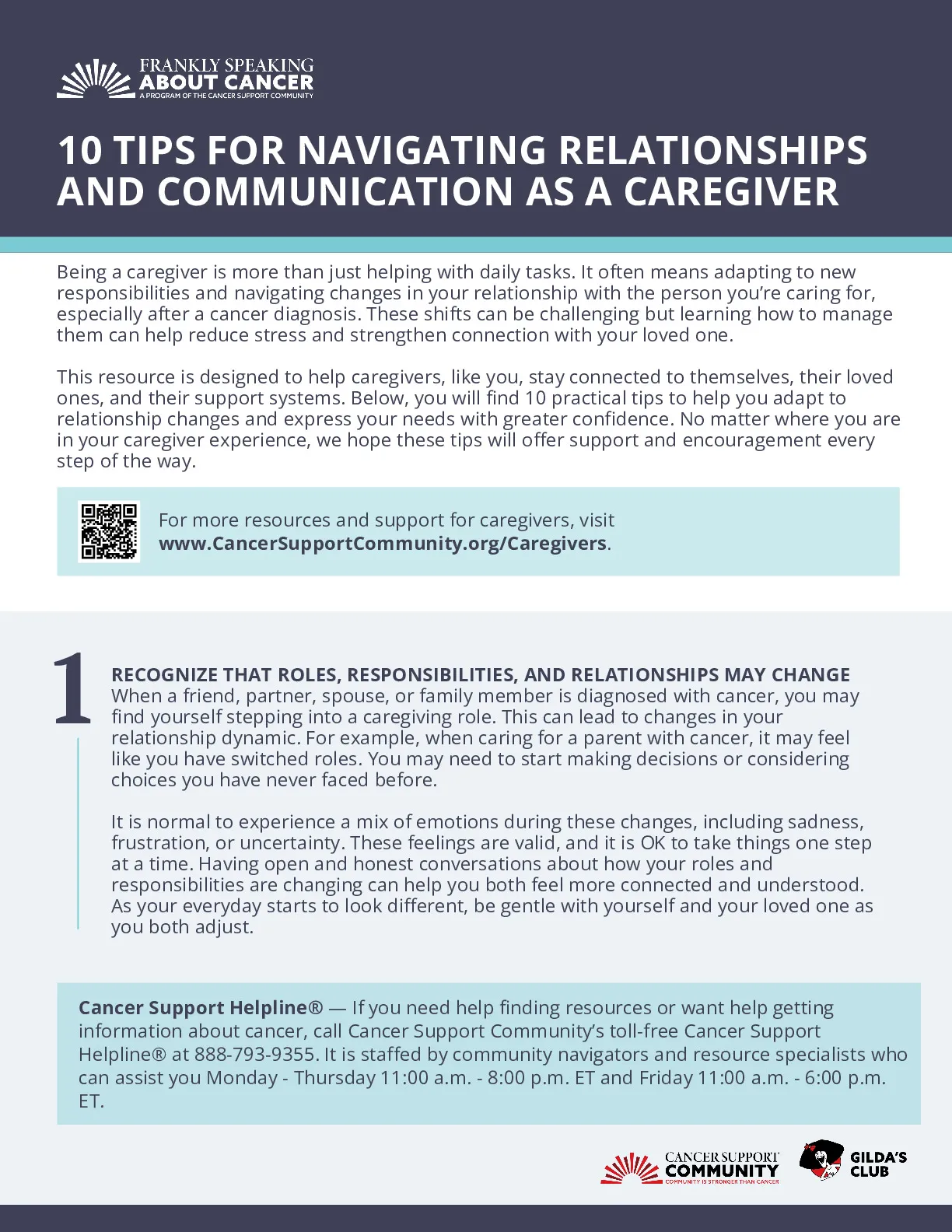
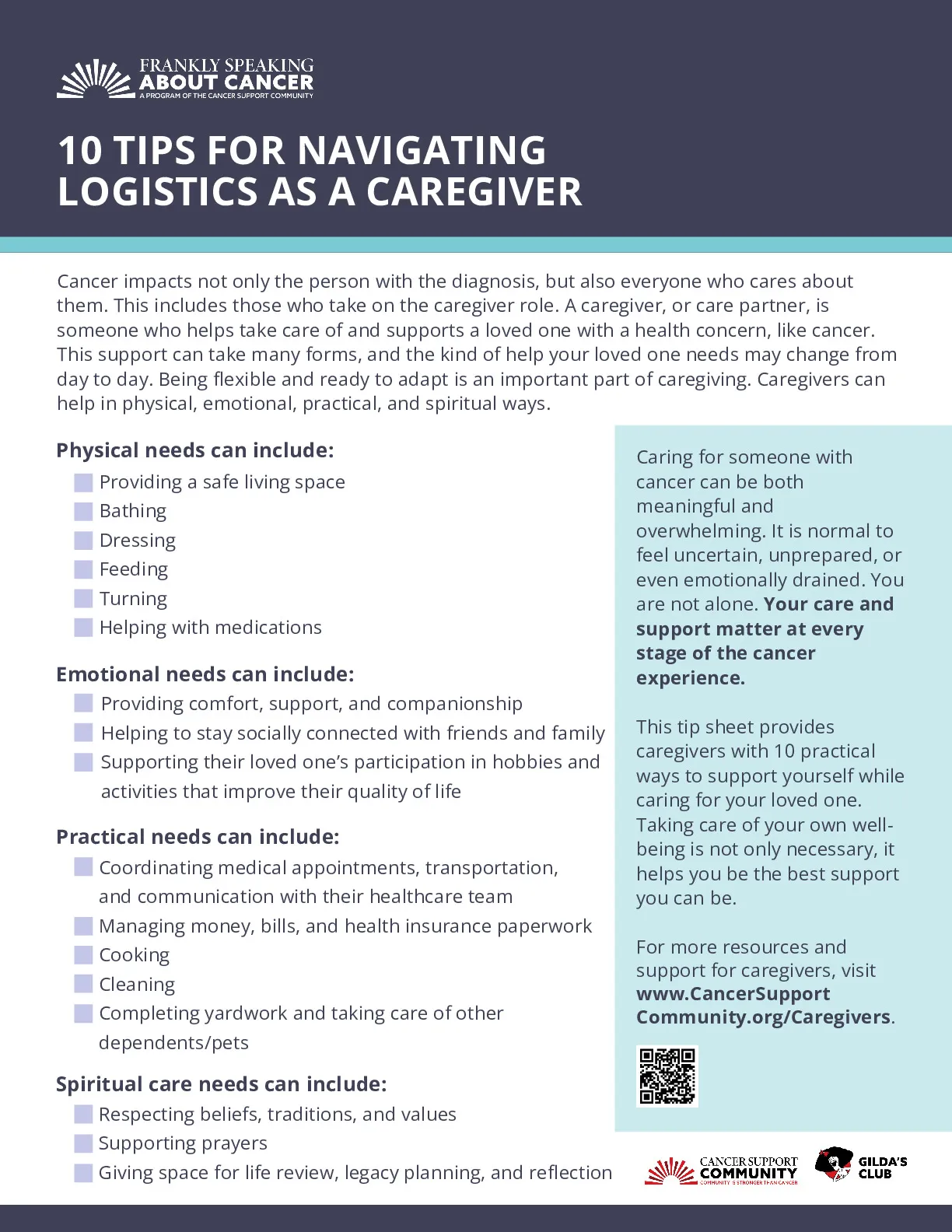
Would you like a print copy of these educational materials?
We can mail our Frankly Speaking About Cancer pieces to you. Shipping is free for up to 20 pounds.