
Targeted Radiotherapy (TRT)
What is Targeted Radiotherapy (TRT)?
TRT is known by many names including:
- Radioligand Therapy (RLT)
- Peptide receptor radionuclide therapy (PRRT), usually for neuroendocrine cancer
- Prostate-specific membrane antigen (PSMA) therapy, for advanced prostate cancer
Your care team may use any of these terms when talking about TRT. For the purposes of this resource, the term targeted radiotherapy (TRT) will be used to describe this type of therapy.
Who Can Receive TRT?
Currently, TRT is available to treat some metastatic prostate cancer and neuroendocrine tumors (NETs). Cancer research is working to expand its use to other cancer types. Eligibility depends on your cancer diagnosis, prior treatments, and overall health. Targeted radiotherapy is designed to find a specific receptor on cancer cells.
Imaging tests are required to see if your cancer cells have this specific receptor that can be targeted. This is commonly done through PET scans. A PET scan uses a tiny amount of radioactive tracer and a special camera to create images that show how active your cells are inside your body.
Speak with your care team to see if TRT is available and right for you based on your imaging results and prior treatments.
Specific types of TRT include:
How Does TRT Work?
Targeted radiotherapy is a treatment that targets cancer cells using a special medicine called a radioligand.
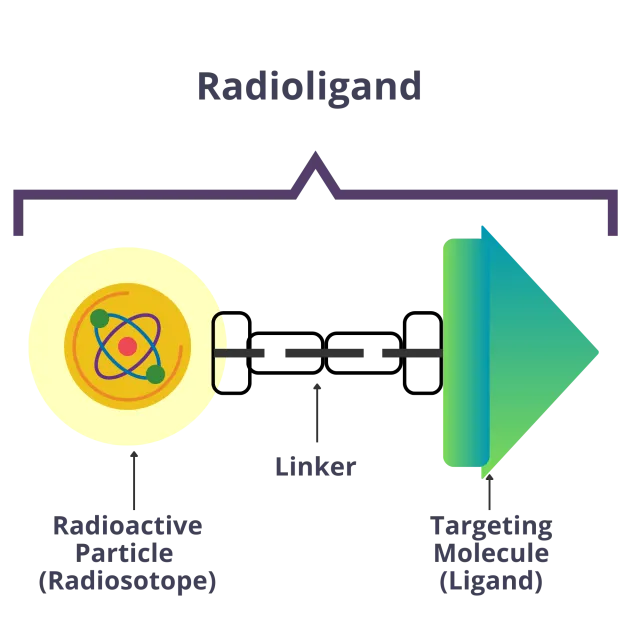
This medicine has 2 parts that are linked together:
- Ligand – a targeting molecule designed to find and attach to the receptor on cancer cells
- Radioactive particle or radioisotope – delivers a small dose of radiation directly to the cancer cell with the specific protein.
Here is how TRT works to treat cancer while reducing harm to healthy cells:
1 The radioligand finds a receptor (or a specific marker, usually a protein) on the cancer cells.
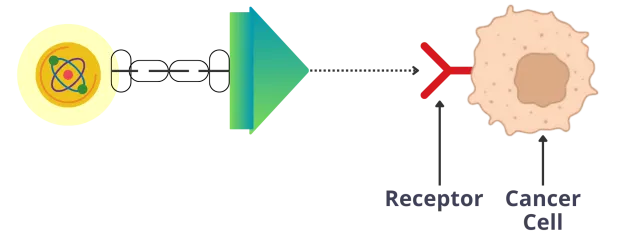
2 The radioligand uses this receptor to attach to the cancer cells.
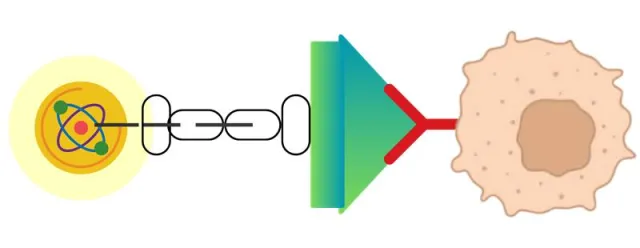
3 The radioactive particle delivers a localized dose of radiation, causing the cancer cells to die. This helps treat cancer while reducing harm to healthy cells.
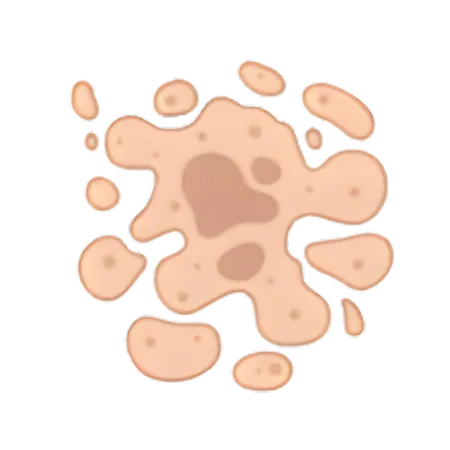
Adapted from a diagram by the National Cancer Institute (2020)
Targeted Radiotherapy Care Team
Feeling confident in your care and comfortable with your care team is important, especially with new treatments. You deserve a healthcare team you can trust to take the best care of you. It is important to find providers who specialize in treating your type of cancer. The experts who work together on your team may be different based on your diagnosis and care center. You may not interact with all of the care team members listed below. A patient navigator can help you understand how and when these providers care for you throughout the TRT process.
The TRT care team may include:
Medical oncologist: Treats cancer with systemic (or whole-body) treatments using medications. Some examples are immunotherapy, chemotherapy, and targeted therapy. They may be the leader of your care team and connect you with other team members.
Radiation oncologist: Treats cancer using radiation therapy. This can help with pain or kill the cancer cells.
Nuclear medicine physician or nuclear medicine radiologist: Uses special medicine that gives off a small amount of radiation. When taken before imaging, this medicine helps see inside your body to treat certain conditions, such as cancer.
Radiologist: Uses external energy sources to create pictures of the inside of your body. This includes X-rays, CT scans, MRI, or ultrasound.
Nurse practitioner (NP), physician assistant (PA), or nurse (RN): Works alongside your oncologist to provide care. At times, you may speak more with this type of healthcare provider than your oncologist.
Oncology social worker and therapist/counselor: Helps you and your caregiver find resources to cope with cancer and its treatment side effects. Social workers can help navigate costs and help with practical concerns. Social workers and therapists are trained mental health professionals. They can help you address your emotions through individual or group therapy.
Patient navigator (or nurse navigator): Helps you manage your care. This includes scheduling appointments, getting answers to your questions, and recommending resources.
Financial navigator: Helps you and your loved ones understand the cost of different treatments. They can explain how your insurance plan may help cover any costs. They may also help find financial assistance programs or payment plans to ease any financial burden. If a financial navigator is not available, a social worker or patient navigator can also help you find support or other resources.
How Does TRT Compare to Other Treatments?
You may be considering more than one treatment option for your cancer. The table below compares TRT to other common cancer treatments. There are other treatment options that may be used to treat your cancer that aren’t listed in this table.
Each patient’s experience is different. You may have only some or none of these side effects. You may receive more than one type of treatment at the same time. How often or how many sessions are needed for each treatment type may vary depending on your cancer type. Talk with your care team about the best treatment options for you and what to expect.
- How it works: Radiation delivered inside the body
- Where it is given: Clinic or hospital
- Impact on healthy cells: Limits harm to healthy cells
- How it is administered: Infusion (IV)
- Common side effects:
- fatigue
- dry mouth
- nausea
- lowering of blood counts
- How it works: Radiation from outside the body
- Where it is given: Clinic or hospital
- Impact on healthy cells: May affect nearby healthy cells
- How it is administered: Radiation machine/table
- Common side effects:
- skin irritation
- fatigue
- organ side effects
- How it works: Drugs attack fast-dividing cells
- Where it is given: Clinic, hospital, or home
- Impact on healthy cells: Affects many healthy cells
- How it is administered: Infusion (IV) or oral pills
- Common side effects:
- nausea
- vomiting
- hair loss
- fatigue
- How it works: Boosts your body’s immune system to attack cancer cells
- Where it is given: Clinic or hospital
- Impact on healthy cells: Limits harm to healthy cells
- How it is administered: Infusion (IV) or injection
- Common side effects:
- fever
- skin irritation
- flu-like symptoms
- How it works: Targets specific genes or pathways that help cancer grow
- Where it is given: Clinic or hospital
- Impact on healthy cells: Can affect healthy cells with same targets
- How it is administered: Oral pills or infusion (IV)
- Common side effects:
- fatigue
- skin irritation
- diarrhea
- mouth sores
- swelling
Receiving the TRT Infusion
As you prepare for treatment, it’s helpful to understand what to expect during and after the infusion.
The therapy is administered via IV infusion in a specialized room within a hospital or clinic. You may receive TRT in a different department other than oncology. It could be with the oncology, radiation oncology, or nuclear medicine team. Nuclear medicine is a medical specialty that uses small amounts of radioactive materials to diagnose or treat diseases.
Nurses will place a small plastic tube (catheter) into a vein, usually in your hand or arm. Throughout the infusion, other medicines will be given to help prevent side effects, like nausea and vomiting, and help protect your kidneys. This process may take up to 4–6 hours in all.
After infusion, your care team will monitor you closely to track progress and manage side effects. To help with the infusion, drink plenty of water and use the bathroom as often as possible during the first few hours after treatment.
Finding a care center. TRT is available at a growing number of community care centers and larger academic centers. If you do not live near a center that offers TRT, talk to your care team. They may be able to:
- Refer you to another provider at a different healthcare center.
- Recommend patient assistance programs to help cover travel, lodging, and food-related cost. You can also ask if you can get assistance to cover lodging and food-related costs for your caregiver.
Managing costs. Talk with your insurance company to see if they will cover TRT treatment and hospital costs. Ask your care team if you qualify to get TRT as part of a clinical trial, where the cost is covered.
I received 6 RLT [TRT] treatments, 6 weeks apart. The treatment was fairly easy and was very successful for me. Besides having to be isolated for 3 days, my side effects were minor, fatigue and dry mouth.
What are the Side Effects?
As with other cancer treatments, side effects and their severity will vary from person to person. Most are mild, but some can be severe. Staying hydrated after your infusion can help. It is important to talk with your care team about what side effects you may experience. Ask your team how they will help you manage any side effects. Common side effects include:
- Fatigue (extreme tiredness) for up to a week after each infusion
- Dry mouth
- Lowering of blood counts (cytopenias)
- Mild nausea (usually goes away within 24–48 hours after each infusion)
- Appetite changes (feeling more hungry or less hungry)
- Pain, including joint and back pain
- Hair thinning
- Temporary worsening of symptoms during first 1–3 days after each infusion
Some side effects can show up later. These may include changes in your blood or how your kidneys and liver work. Before and after TRT, your care team may have you do tests that check your blood counts, kidney function, and liver function. Blood tests look at how many healthy blood cells you have. These cells help your body fight infection, carry oxygen, and stop bleeding.
Tell your care team immediately about any fever, severe pain, or bleeding. Even though it is rare, TRT can slightly increase the chance of developing another type of cancer later. Tell your care team about any new or changing side effects, so they can help you manage them and give you the best care. Severe side effects are rare. Ask about who to call when you experience any side effects and get their contact information.
PRRT [TRT] did force significant changes in my day-to-day living for the first week after an infusion. For as much as possible, I had to keep at least 6 feet of distance from everyone else, especially my spouse. It was recommended that I use a single toilet at home with disposable paper around the toilet to absorb splashes, and to flush twice after each usage. It was also recommended that I stay at home as much as possible. The goal of these changes was to limit exposure of others to the radiation.
After the Targeted radiotherapy Infusion
After TRT, your body may emit, or give off, a small amount of radiation for a short time (around 3 days). Because of this, there are special safety steps you need to follow after each session.
These are general guidelines and may vary. Speak with your care team for specific instructions.
Around loved ones:
- Limit close contact with others in your household (social distance, at least 3 feet apart) for at least 3 days. Limit close contact with children and pregnant individuals for 7 days.
- If your household has multiple bedrooms, set up separate sleeping arrangements (separate room and bed).
- Avoid close intimate contact and sexual activity for at least 7 days.
- You can continue normal contact with your pets because their bodies process radiation differently than ours.
- You can take public transportation or travel during this time. Airport scanners may detect small amounts of radiation from your treatment. Tell your TRT care team before you travel — they may give you a card explaining your treatment if needed.
For bathroom and hygiene:
- Use a separate toilet from the rest of your household (if available).
- Be in a seated position on the toilet.
- Use toilet paper every time to limit spread of radioactive waste.
- Flush the toilet twice with the lid down.
- Handwash thoroughly after using the toilet.
Your care team will provide specific instructions about sleeping arrangements, bathroom use, and hygiene. Ask your team all the questions you have to fully understand these details. This could be support for how to follow these guidelines within your own home. These guidelines exist to help keep you and your loved ones safe until any leftover radiation fully exits your body.
It may feel lonely and uncomfortable to keep your distance from others during this time. Here are some steps that can help:
- Before you begin the infusions, plan ahead with your loved ones for any needs. This may include childcare, meals, and transportation.
- Stay connected through video calls or other shared activities that could be done virtually. Ask your care team for any resources or support groups specific to TRT for you or your loved ones. Connecting with others with similar experiences can be very helpful and powerful during this time.
- Caring for your physical health and mental health are equally important for you and your loved one.
Seek the help and support that you need at any point while receiving TRT.
Learn as much as you can about RLT [TRT] from credible sources. Having such information can help with doctor-patient communication. Ask for clarification any time you don’t understand information you are receiving.
Coping with TRT
Experiencing cancer is very difficult and can impact your mental health. Seek the help and support that you need at any point while receiving TRT.
Tips for Taking Control and Finding Support
Write down your questions before each visit. Keep a journal to take notes and track your progress over time. This can include information about tests, lab work, and the symptoms and side effects you may be experiencing. Ask your team if you should send any questions before your appointment through your patient portal.
Take someone with you to appointments, for support and an extra set of eyes and ears. If you go to an appointment alone, take notes and/or record your conversation with your doctor. Be sure to ask your doctor if it is OK to record.
Be proactive. Talk to your healthcare team or financial navigator about ways to manage treatment costs before you start treatment. Connecting with an organization, like Cancer Support Community, can help you find resources. Ask about assistance programs that can help cover travel, lodging, and other living expenses during treatment.
Lead the conversation. Bring up any side effects or concerns you may have. Talk about any new symptoms you are experiencing no matter how small. Even if your healthcare team doesn’t ask about a specific side effect, be proactive and let them know.
Get social, emotional, and practical support. Talk to your care team about finding resources that can help. Ask them for a mentor or to be matched with another person with your specific cancer or someone who has received TRT.
Ask for help. Think about people in your life who can help you during this time. This may be friends, your faith community, a support group, or co-workers. Make a list of things you need help with (childcare, meal prep, laundry, et.) and who can help with each task.

Call Our Helpline
We offer free navigation to cancer patients and their loved ones with a variety of needs, including concerns about cancer costs.
Supporting TRT Caregivers
You play an integral role in providing care for your loved one. It may feel difficult navigating social isolation after each TRT infusion. You may feel worried about how that can affect your daily life and intimacy. The stress that comes with navigating a new treatment for your loved one can lead to a variety of emotions. You are not alone in feeling the emotional effects of this role. You may feel uncertain about how this new type of treatment will impact your loved one and their cancer experience.
During this time, you may find yourself taking on more of the household chores than before. You may feel like you have too many responsibilities between caregiving and your everyday life. It is natural to feel frustrated, overwhelmed, and tired at times. Identify who is in your support network, and ask the care team for resources and support group options. Also, consider connecting with a therapist, social worker, or psychologist to share your experience.
Being a caregiver is an important role. It is rewarding, yet the responsibilities can often be stressful and take up a great deal of time. Throughout caregiving, it is important to take care of your own physical and emotional health. Addressing your ongoing psychosocial health is essential for you to provide long-term caregiving.
TRT Clinical Trials
Be sure to ask your care team about any available clinical trials that you may be eligible for. Clinical trials are research studies that test new treatments or explore better ways to use existing treatments, including for different types of cancer. Ask about the potential benefits and risks. It is important to make sure you are aware of all your treatment options. Your doctor may refer you to an TRT clinical trial, or you may be interested in finding one on your own.
TRT clinical trials can test different things.
- Some clinical trials are testing if an already approved TRT works in other types of cancers.
- Some may be testing a new type of TRT.
- Depending on the type of cancer you have, clinical trials may be the only way for you to receive TRT.
- There are also clinical trials to better understand how to manage TRT side effects.
Even if you are not eligible for TRT, you may have access to TRT or other treatments through a clinical trial. To find lists of available clinical trials, visit these websites:
ClinicalTrials.gov
CISCRP- Search for a Clinical Trial
National Cancer Institute Clinical Trials Search
Get more information on clinical trialsBy the 4th treatment, my tumor was totally gone, and it stayed that way through the last 2 infusions. My treatment ended in July 2025, and PET scans since then have confirmed I have no signs of reoccurring cancer. My oncologist says I may not be cured, but I’m in remission with a good chance for a lengthy clear path.

Find Your Location
Find a caring and supportive Cancer Support Community or Gilda's Club location near you.