Sally (standing) pictured with her mother-in-law and family in 2015.
What's critical is finding the right resources. We all know about the 2 a.m. panic and ‘Dr. Google,’ and that can lead you down a scary path. Whereas good resources and information can lift you back up to realize, OK, here’s what’s actually happening.
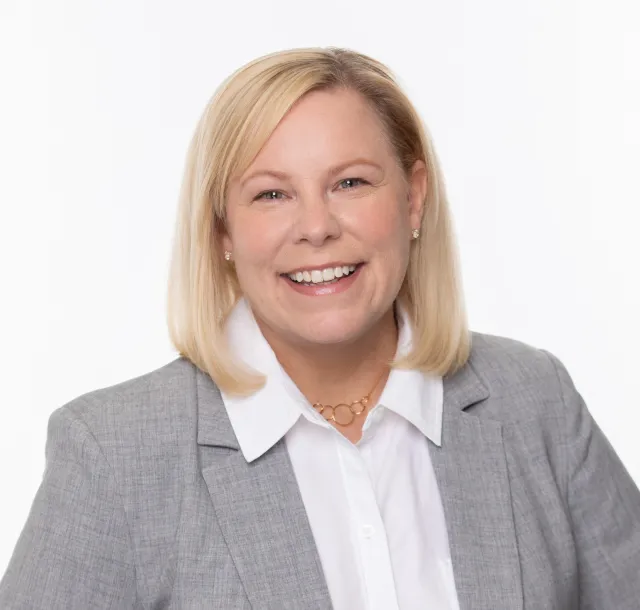
Sally Werner, R.N., B.S.N, M.S.H.A.CEO, Cancer Support Community; cancer caregiver
Firsthand Caregiver Tips From CSC's CEO
When her mother-in-law was diagnosed with cancer, Sally quickly jumped in to offer support. Though she lives more than 2,000 miles away from her parents-in-law, Sally — a former oncology nurse — knew there were ways she could help, even from afar.
“I’ve known my mother-in-law since I was 15 years old,” she says, “so she’s like a second mom to me.”
As all families facing cancer do, Sally’s family has experienced hard times and intense moments. But thanks to a mix of cancer support resources, they have been able to navigate the ups and downs with resilience, strength, and hope.
Sally shares 5 tips for caregivers from her personal experiences:
1. Ask for help — always and often.
Sally notes that cancer care teams are staffed with experts who are available to help you and your loved one. Reach out to them and let them know your questions and concerns, she urges.
“Using those experts could help you get to a resolution quickly, versus spinning and reeling on something,” says Sally. “At one point, I reached out to our clinical trials nurse because I wanted to think about what’s next. And we had a very enlightening conversation about clinical trials, which is not my area of expertise.”
Asking for help can also include calling our toll-free Cancer Support Helpline at CSC-867-5309. Our Helpline navigators are available to provide guidance, resources, and emotional support for anyone facing cancer — even if you’re just looking for someone who is willing to listen.
“You don’t always have to have the answer, even the right answer, as long as you know who to call,” says Sally. “So, call CSC’s Helpline, early and often.”
2. Follow your loved one's lead.
“It's great to check in with your loved one,” notes Sally, “but if they are not actively asking for support, it’s probably because they want to forget cancer for a couple of days, right?”
In her own experience, Sally would check in with her mother-in-law a day or two after treatment. “I always just say, 'How are you feeling?’ Otherwise, we follow my mother-in-law and father-in-law's lead.”
No one wants to interject support at the wrong moment or offer the wrong type of support, adds Sally. “But sometimes we can be overbearing when we don't want to be. Following your loved one’s lead can help ensure you are offering support when they want it.”
All cancers are complex. It doesn’t matter what the diagnosis is. Regardless of where or who you are, it’s always better to reach out than not. There are probably some resources I would have tapped into even earlier had I been humble enough to reach out and say, ‘OK, help me with this.’ Regardless of our background, we have to be humble.
Sally
3. Be mindful of what you take off your loved one’s plate.
Offering help is okay, with the understanding that some tasks may be meaningful or enjoyable for your loved one. It might be something they want to do. Removing those responsibilities — even with good intentions — can take away their sense of ownership, satisfaction, or creativity.
“Well-intentioned caregivers, family or not, start to think, ‘Oh, I'll take this off your plate,’” says Sally.
“My father-in-law started mowing the lawn, and my mother-in-law finally said to him, ‘I take so much pleasure in that. It has always been my thing. When you start to take things away, I feel like I'm sicker than I am.’”
Before jumping in to help, Sally suggests, “Let your loved one tell you, ‘Here's what I actually want from you: Don't do that. Do this.’”
4. Have the tough conversations.
For Sally, it was important to create space for her mother-in-law to have tough conversations with the family — if and when she wanted to have them.
“We all manage the cancer experience differently from a personal standpoint,” Sally reflects. “My mother-in-law wanted to be so strong for her whole family. She's never been afraid to show emotion, but I think through most of this experience, she's withheld that emotion from her family.”
So, Sally let her mother-in-law know: “It's OK to be vulnerable. It's OK to tell us how you're feeling. [And] if you don't want to tell us, who can we connect you to, so that you don't hold all this in?’”
“I think she's found some very positive coping mechanisms through some of those tough conversations,” adds Sally.
In the same way, Sally notes the importance of respecting your loved one’s perspective — a unique point of view shaped by everything from their personal life experiences and familial upbringing to generational influences.
“I would never want to disrespect my mother-in-law’s knowledge, understanding, or perspective of the world," Sally says. “I had to remind myself that the way she grew up with cancer was very different from where cancer care is today. When her father went through cancer years ago, there weren't many options, and some cancer treatments were still a bit archaic. And that's what she was expecting was this worst-case scenario.”
To Zoom, or Not To Zoom
If you’re a long-distance caregiver, Sally suggests talking with a social worker or a cancer navigator about when it may be most useful for you to be with your loved one in person. In many cases, you’ll find ways to offer support from afar, thanks to digital technology.
When talking with the social worker or navigator, Sally says, "Ask about the heatmap, like: ‘When do I use my airmiles to be there in person? When is it going to be OK to do Zoom calls instead?’”
For example, Sally took time off work so that she could travel to be with her mother-in-law after a critical surgery. But for her mother-in-law's follow-up doctor’s appointments, Sally has been able to join via Zoom, saving travel time and expenses for events where she can be most helpful in person.
Sally visiting her mother-in-law in the hospital after a critical surgery in 2023.
5. Be sensitive to your whole family caregiver unit.
Sally points out that there isn't one “right” timeline or way of coping with a cancer diagnosis.
Respecting each family member’s unique needs fosters empathy, trust, and a supportive environment where everyone can feel safe to respond and heal at their own pace.
As Sally sums it up, “Everyone processes differently and at different times.”
Tell Us Your Story
Are you getting help from a loved one, or helping a loved one navigate cancer during the holidays? Describe a kind act someone has done for you & what it meant to you.