

Publications & Presentations
The Cancer Support Community is a leader in research on the patient, survivor, and caregiver experience. Our work appears in posters and presentations shared at professional conferences, published articles in preeminent peer-reviewed journals, educational materials for patients and caregivers, and comprehensive research reports to help inform cancer care and patient advocacy.

Use the search filters below to discover our research findings on diverse topics related to patient and caregiver quality of life, including:
- Psychosocial well-being and symptom management
- Patient-provider communication
- Treatment options
- Patient advocacy
- Financial toxicity and other barriers to health equity
- Experiences and perspectives on precision medicine
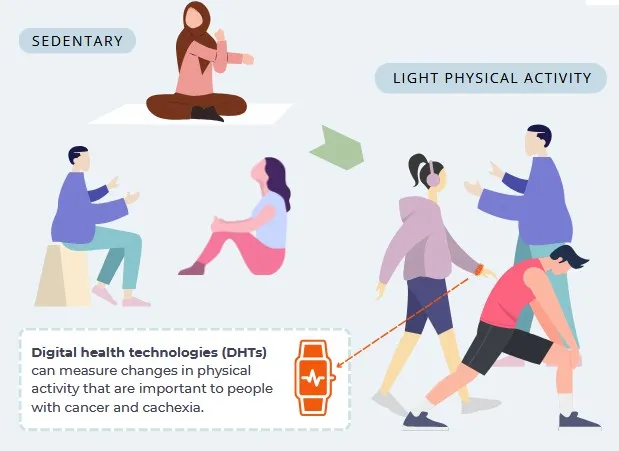
Meaningful Change in the Ability to Do Activities With Cancer & Cachexia
A research team, including Cancer Support Community, surveyed 181 adults with cancer and cachexia to learn what changes in activity would be meaningful. These findings highlight how researchers can measure patient-centered changes and guide the development of new treatments.
In this study, digital health technologies (DHT) were used to measure what is meaningful to people with cancer-related cachexia when it comes to physical activity. Most participants (96%) felt that the ability to do light physical activity for even a few minutes, compared to no physical activity, was meaningful. This study showed that DHTs can be a useful tool for healthcare providers to monitor changes in physical activities that matter most to patients.
Patients with advanced ovarian cancer often experience sleep disturbance and fatigue, which can negatively impact their daily lives. This study interviewed 20 patients with advanced ovarian cancer to understand how their sleep disturbance and fatigue changed throughout their treatment. Patients experienced intense sleep disturbance and fatigue that worsened their quality of life, including their mental and physical health. However, patients experienced different types of sleep and fatigue issues while receiving treatment, and symptoms were worst during chemotherapy. Many were unsatisfied with their healthcare providers' communication about sleep and fatigue issues, highlighting the need for better screening and supportive care during treatment.
Non-small cell lung cancer (NSCLC), which comprises 85% of cases, is aggressive, often diagnosed late, and associated with significant symptom burden, and poor health-related quality of life (HRQoL), as well as poor prognosis. This study aims to assess the role metastatic status and treatment history play in HRQoL among NSCLC patients.
As technology continues to become a prominent tool in health care, there is a growing need to increase documentation of patients' perceptions and opinions on using artificial intelligence (AI) and technology in their cancer care. This aim of this study was to understand patients' experiences with AI and technology and highlight their thoughts on incorporating AI and technology in their cancer treatment.
This study examines the barriers that Hispanic/Latino (H/L) cancer patients face in participating in clinical trials in the U.S. The research focuses on evaluating the role of healthcare providers in addressing these challenges, building trust, and reducing disparities to improve trial participation.
Cancer patients and survivors frequently struggle with chronic pain. Previous research demonstrates that American Indian/Alaska Native (AI/AN) patients may experience higher pain burden than non-Hispanic White (NHW) patients, but cultural beliefs make it difficult to discuss pain and illness. The aim of the study was to assess the burden in, and explore the facets, of pain interference among AI/AN and NHW cancer patients and survivors.
People with advanced ovarian cancer often struggle with poor sleep and severe fatigue, which can hamper their quality of life. This study examined whether commonly used Patient Reported Outcome Measurement Information System (PROMIS) sleep and fatigue questionnaires fully capture the problems these patients experience.
Treatment adherence is a critical part of effective cancer care, and it can be influenced by how well patients tolerate treatment. Traditional definitions of tolerability focus on managing adverse events but often overlook the patient’s perspective and quality of life. This study aims to better understand breast cancer patients’ perceptions of treatment tolerability by metastatic status and its association with adherence.
Cancer cachexia affects up to 80% of cancer patients, causing weight loss, fatigue, and reduced quality of life. Communication about the condition is limited, so a plain-language lexicon was developed. This study aims to assess its effectiveness in improving knowledge and communication among patients and caregivers.
Evidence shows that social support is crucial for improving cancer health outcomes in communities, but communities of color are not receiving the necessary support services needed specifically for them. Programs have been created that only meet the needs of some populations, due in part to a lack of baseline data about what “support” means within communities of color and other diverse communities, such as people living in rural areas. Because little evidence exists to the contrary, the beliefs, values, and modes of providing healthcare of white dominant culture are viewed as the norm against which all other ways of being are evaluated. Through our qualitative landscape analysis we acknowledged barriers to cancer care that exist while exploring ways that psychosocial support needs indeed vary by community.