
6 Things to Know About 2026 Open Enrollment

Even if you loved your health insurance plan in 2025, it may look different in 2026. It’s always good to review your coverage during open enrollment.
Open enrollment is the time of year that you can make changes to your health insurance coverage, usually through the Health Insurance Marketplace® (HealthCare.gov). Our Cancer Support Helpline’s financial specialists, Christina Bach and Aimee Hoch, answer 6 key questions to help you prepare for 2025 open enrollment.
1. When can I enroll or make changes to my plan?
Open enrollment for ACA (Affordable Care Act, also known as “Obamacare”) insurance plans for the 2026 coverage year starts November 1 for states that use the HealthCare.gov marketplace. End dates vary based upon state.
Find more information about your state’s open enrollment dates.
Even if you had a plan in 2025, it is essential to make sure that plan is being offered again in your area for 2026 and that your providers are still in-network with that plan. Out-of-pocket amounts like deductibles (the amount you pay for covered medical expenses before your insurance plan starts to pay) and maximum out-of-pocket can change from year to year, as well.
Note: For your coverage to begin Jan. 1, 2026, you must purchase your plan by December 15.
2. Who can buy coverage through the Health Insurance Marketplace?
Any individual who is a citizen or lawfully present in the country who lives in the United States can buy health insurance through the Health Insurance Marketplace.
Individuals and families with lower incomes may be eligible for premium subsidy and cost-sharing assistance.
Beginning in January 2026, enhanced premium credits are set to expire. Also, low-income, lawfully present immigrants who make less than 100% of federal poverty limit (FPL) will no longer be eligible for premium tax credits. This impacts individuals who are not eligible for Medicaid due to their immigration status.
3. What types of plans are available?
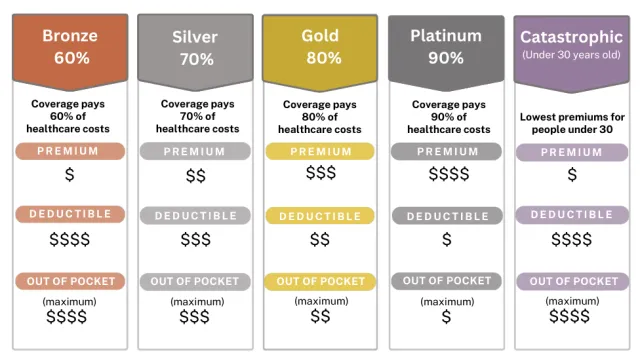
There are several levels of plans available (bronze, silver, gold, and platinum). These are referred to as the “medal levels.”
Keep in mind:
- Bronze plans are least expensive on the front end, but they have higher out-of-pocket expenses when you use your coverage.
- Platinum plans are most expensive on the front end, but they have lower out-of-pocket expenses when you use your coverage.
Catastrophic plans are also available. These plans are lower in premium cost, have limited benefits, and are only available to certain individuals under the age of 30 or have a hardship exemption.
New for 2026: Catastrophic coverage eligibility is expanding. Learn more about catastrophic plans.
4. What do I need to think about before buying a plan?
It’s important to weigh your healthcare needs with the coverage offered by each plan. Remember that much of insurance is planning for the unexpected.
Marketplace plans are required to cover preexisting conditions. So, if you have a preexisting condition, it shouldn’t be a barrier to you getting coverage. It also shouldn’t cost you more than it costs someone who didn’t have that preexisting condition.
Always do the math:
- Add your monthly premium cost + deductible + co-pays + coinsurance
- Then, subtract any premium subsidies and cost sharing subsidies
This will give you a general sense of your total out-of-pocket responsibilities.
Tip: Think about where a medical bill may have surprised you in the last year. Would changes in the type of plan you have change the amount of that bill?
5. How do I buy a plan?
The best place to start is the Health Insurance Marketplace. Some states have their own insurance marketplace, but starting with HealthCare.gov will get you to the right place for your state. You should be able to browse plans for 2026 beginning Nov. 1, 2025.
Ask your provider for a list of plans they will have contracts with in 2026. This can change every year, so it’s important to be sure your provider is in-network with your plan.
Buying through the marketplace or state's insurance exchange allows you to get assistance for out-of-pocket costs like premium and cost-sharing assistance.
6. How can I get help to navigate open enrollment?
If there is a financial navigator at your treatment center, they may be able to help you understand your choices and guide you through open enrollment.
Our Cancer Support Helpline offers free, personalized navigation by phone and online for people impacted by cancer. This includes financial navigation. Our financial navigation specialists are trained in cancer-specific issues and resources that may impact your open enrollment decisions. Call CSC-867-5309 to be connected with one of our financial specialists.
Learn More About Health Insurance
Watch our 14-minute video guide, below, to understand health insurance, including terms, questions, and resources for financial aid. Then stop by our Support Room for more videos on insurance and managing cancer care costs.
Understanding Health Insurance
This video is a guide to understanding health insurance. It covers the types of health insurance, health insurance terms, questions, and resources for financial aid and advice.
You can also learn more through OncoLink’s Health Insurance Education Webinar Series. These webinars are free and available on demand.
Need Help Coping With Cancer?
Learn tips to cope with cancer as a patient, a survivor, or a loved one of someone with cancer.
Social Security Disability Benefits
Some people with a cancer diagnosis will quality for disability benefits. Here are key things to know.