

Publications & Presentations
The Cancer Support Community is a leader in research on the patient, survivor, and caregiver experience. Our work appears in posters and presentations shared at professional conferences, published articles in preeminent peer-reviewed journals, educational materials for patients and caregivers, and comprehensive research reports to help inform cancer care and patient advocacy.
Use the search filters below to discover our research findings on diverse topics related to patient and caregiver quality of life, including:
- Psychosocial well-being and symptom management
- Patient-provider communication
- Treatment options
- Patient advocacy
- Financial toxicity and other barriers to health equity
- Experiences and perspectives on precision medicine
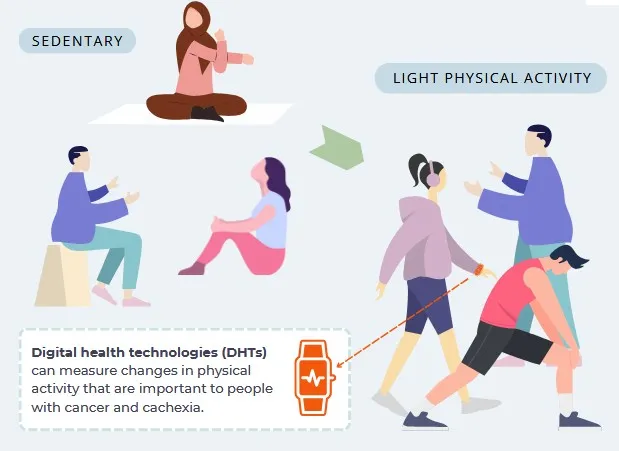
Meaningful Change in the Ability to Do Activities With Cancer & Cachexia
A research team, including Cancer Support Community, surveyed 181 adults with cancer and cachexia to learn what changes in activity would be meaningful. These findings highlight how researchers can measure patient-centered changes and guide the development of new treatments.
Treatment adherence is a critical part of effective cancer care, and it can be influenced by how well patients tolerate treatment. Traditional definitions of tolerability focus on managing adverse events but often overlook the patient’s perspective and quality of life. This study aims to better understand breast cancer patients’ perceptions of treatment tolerability by metastatic status and its association with adherence.
Cancer cachexia affects up to 80% of cancer patients, causing weight loss, fatigue, and reduced quality of life. Communication about the condition is limited, so a plain-language lexicon was developed. This study aims to assess its effectiveness in improving knowledge and communication among patients and caregivers.
Evidence shows that social support is crucial for improving cancer health outcomes in communities, but communities of color are not receiving the necessary support services needed specifically for them. Programs have been created that only meet the needs of some populations, due in part to a lack of baseline data about what “support” means within communities of color and other diverse communities, such as people living in rural areas. Because little evidence exists to the contrary, the beliefs, values, and modes of providing healthcare of white dominant culture are viewed as the norm against which all other ways of being are evaluated. Through our qualitative landscape analysis we acknowledged barriers to cancer care that exist while exploring ways that psychosocial support needs indeed vary by community.
Specialty navigation supports patients and caregivers with in-depth education, advocacy, and resource linking. This specialty navigation takes expertise on the part of the navigator and additional time to ensure a full understanding of the patient's situation, needs, and the best approach to overcoming barriers.
CAR T patients and caregivers had significant unmet needs that could become barriers to care, especially those who had not yet been approved for treatment and were not yet eligible for a specific pharmaceutical company’s Patient Assistance Program. Using a proactive model of navigation to provide education and resources to patients and caregivers has allowed CSC to identify some of the key psychosocial and practical
barriers to care for the CAR T population.
Cancer Support Community’s (CSC) CAR T Navigation Program is an innovative practice initiative for which social workers take the lead and work alongside patients and caregivers to navigate systems of care, provide essential resources and offer ongoing support.
Young adults with cancer face unique and complex challenges that are often overlooked in the broader cancer care landscape. This study analyzes the impact of Cancer Transitions: Moving Beyond Treatment® for Young Adults program (CTYA) and its efficacy in providing relevant and beneficial psychosocial education and support for YAs transitioning into post-treatment survivorship.
Hematologic malignancies (HM) often require treatments that carry numerous adverse effects, high costs, and long travel requirements. Current assessments of HM treatment tolerability focus mainly on physical side effects and may overlook other factors that influence patients’ experiences. This study aims to further understand patients’ perceptions of HM cancer treatment tolerability and investigate how these perceptions may be related to income.
Treatment adherence is a critical part of effective cancer care, and it can be influenced by how well patients tolerate treatment. Traditional definitions of tolerability focus on managing adverse events but often overlook the patient’s perspective and quality of life. This study aims to better understand breast cancer patients’ perceptions of treatment tolerability by metastatic status and its association with adherence.
Treating lung cancer requires complex decision making, highlighting a critical need for patient-centered communication. The aim of this study was to understand how patient-centered communication may influence knowledge and preparedness among patients with lung cancer when making treatment decisions.